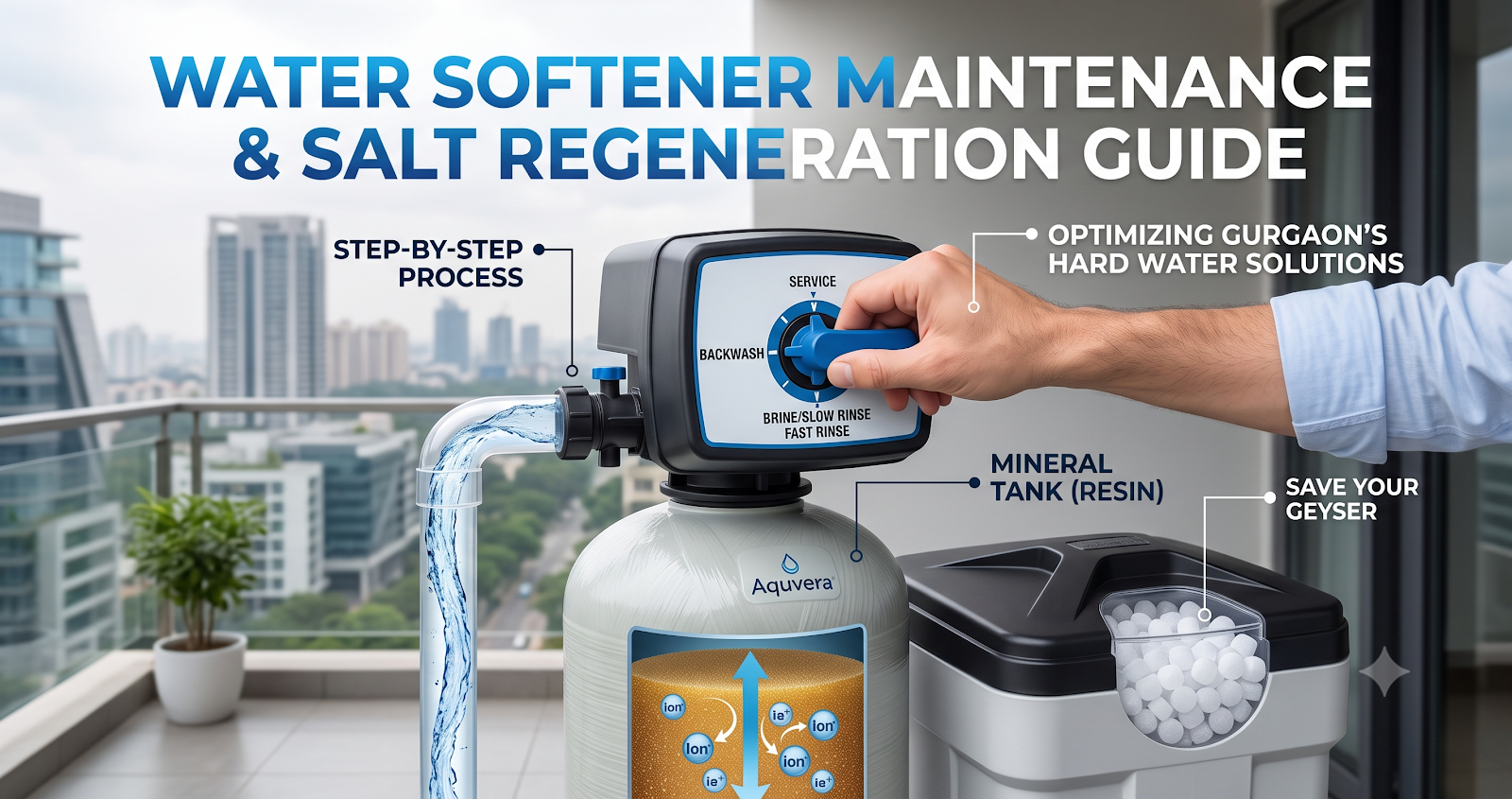
Water Softener Maintenance and Salt Regeneration Guide
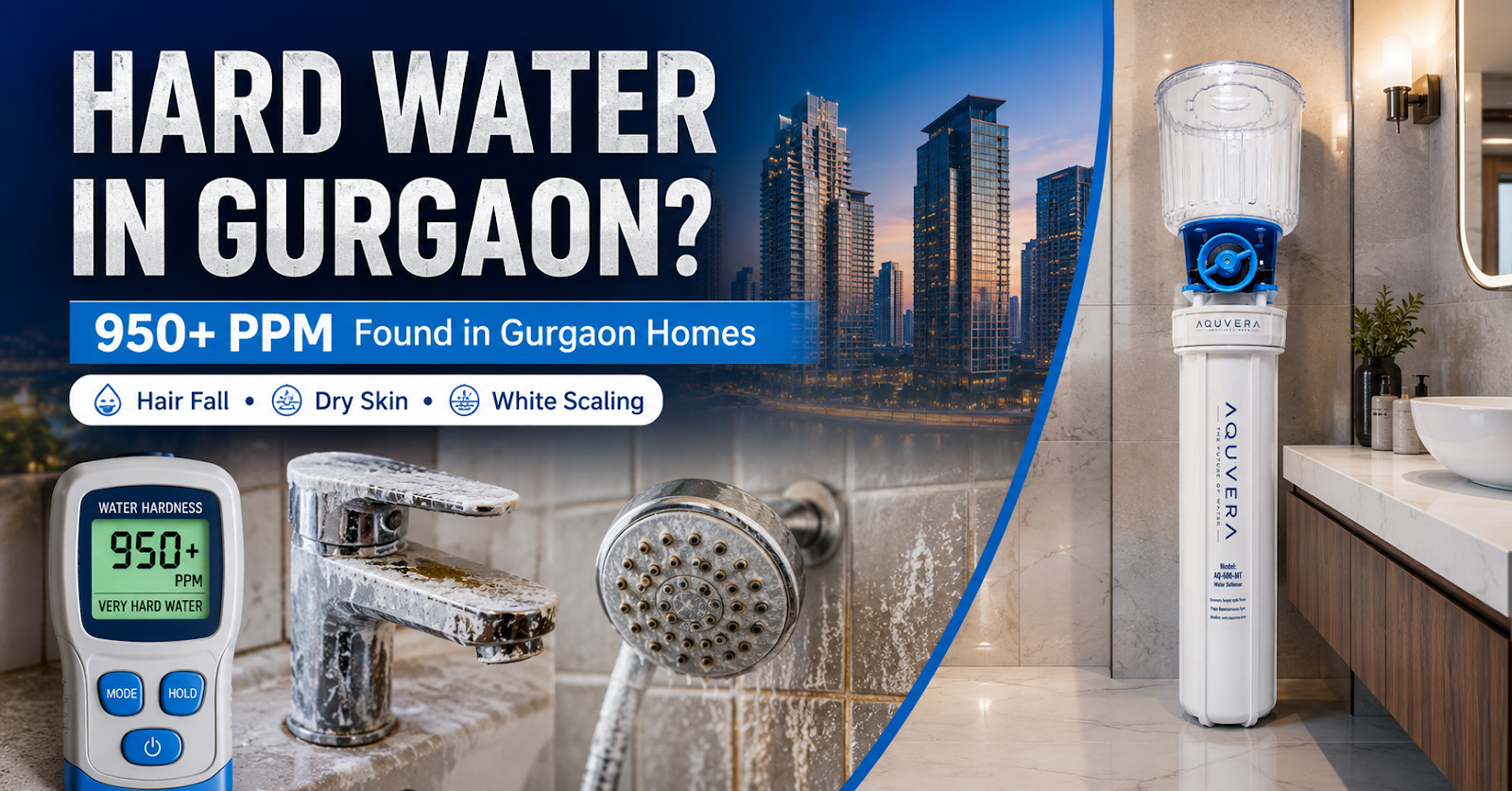
Do you live in Gurgaon or Delhi NCR? Then you probably know how it goes: you step out of the shower after a wash to find your skin is dry and itchy, see another batch of hair in the drain, and spot difficult-to-remove white scum slowly covering your top quality bathroom fittings. Also secretly, your geyser is slowly heating water for you longer and consuming more electricity each single month. These complaints of plumbing problems are not only related with each other. Rather, they come from water in Gurgaon carrying such big amounts of calcium and magnesium, that when water is boiled or cooled it leaves behind such deposits (which is known as hard water). A water softener can be a great help, but homeowners often forget one simple thing:
Water softener is not one-time installation. Regular cleaning and salt regeneration are important. Even the most effective water softener, when neglected, fails to work altogether and leaves your home with the same water quality issues as ever.
Why Water Softeners Need Regular Maintenance
To understand why maintenance is important, look into the resin tank of your water softener. Its job is to absorb hardness minerals, primarily calcium deposits and magnesium deposits, that come with every gallon of hard borewell water that comes through your apartment's plumbing.
These deposits are found on the millions of tiny resin beads that make up your water softener. Eventually, one of these tiny beads will accumulate calcium and magnesium deposits to the point of exhaustion. When this happens, the water softening capacity of your machine dramatically decreases. Hard water begins to flow past the resin bed, and into your showers, washing machines, and geysers. Maintenance keeps these deposits off your resin beads and away from your home's plumbing for years to come.
Signs Your Water Softener Needs Regeneration
How will you know when your softener’s resin is full? Here are some signs your home will show you when it is time to clean your water softener:
No lather: Shampoo, body wash, and laundry detergent will have little to no lather
Water spots: You will see white spots on glassware, inside shower doors, and on chrome faucets
Hard water: Water will feel hard or squeaky when washing your hands
Dry hair: Your hair will feel dry, frizzy, breaking, or falling out after a shower
Dry skin: Your skin will feel dry, tight, itchy, or flaky right after a shower
White scale: White scale will return around your shower head, on the edges of your buckets, and on the geyser inlet pipe.
What is Water Softener Salt Regeneration?
For apartment owners and residents, ion exchange is a term that can be vaguely familiar, originating in high school chemistry class. Ion exchange, however, is a simple process with an even simpler explanation.
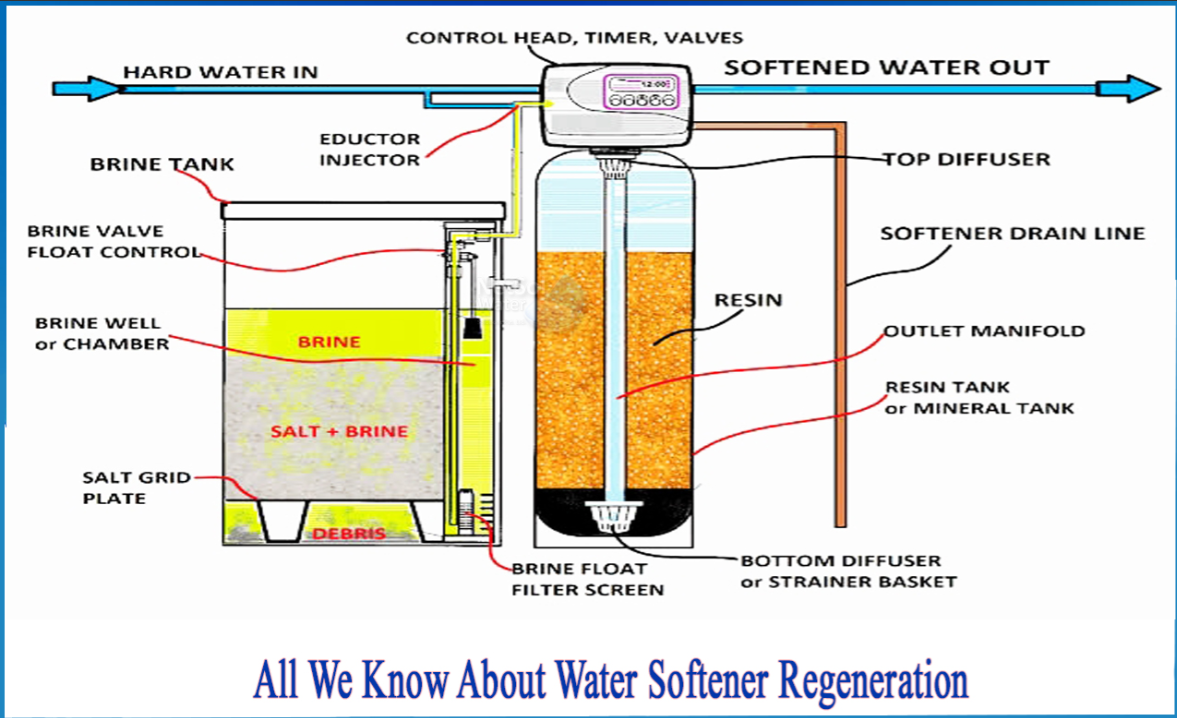
Inside the resin beads of the water softener are microscopic magnets. As the hard water passes through the beads, they attract the hardness minerals and replace them with soft sodium ions.
After a week or two of the water softener working, those beads are completely covered with calcium and magnesium and can no longer attract any more hardness minerals. The salt in the regeneration process is used to rinse the beads of the hardness minerals they have collected. The positively charged salt ions are much stronger than the positively charged calcium and magnesium ions, so they are able to push them off the beads. The saltwater solution then carries the hardness minerals away with it so that the water softener can be used again to keep the home's pipes free of harmful buildup.
Step-by-Step Water Softener Regeneration Process
Whether you have a compact bathroom water softener or a whole-house system on your apartment balcony, regenerating a manual or semi-automatic unit follows a straightforward logical order.
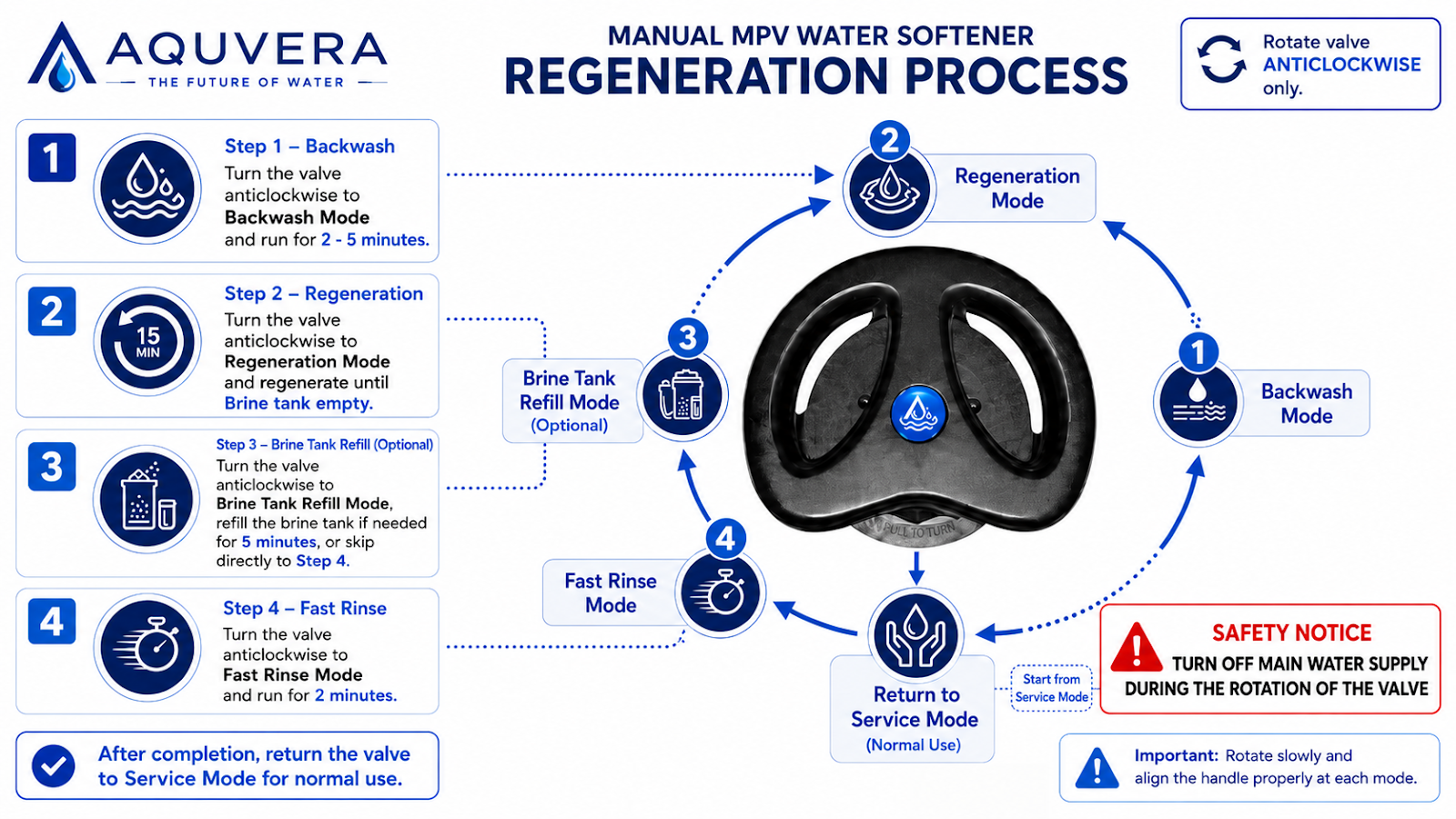
1.Turn OFF Main Water Supply:Prevents unsoftened water from entering household plumbing during service.Locate the inlet valve feeding your water softener unit and turn it to the OFF position. If your unit has a bypass valve, switch it to Bypass Mode so household taps can still access water if urgently needed.
2.Rotate Valve to Rinse Mode:Backwashes sediment out of the resin tank.Turn the top multi-port control valve to the Backwash / Rinse setting. Let the water run for 8 to 10 minutes. This lifts and loosens the compacted resin bed and flushes out any trapped dirt, iron, or pipe sediment down the drain line.
3.Flush the Resin Bed:Prepares resin beads for uniform brine contact.Switch the valve briefly to Fast Rinse for 3 to 5 minutes to settle the resin beads evenly across the bottom of the mineral tank.
4.Prepare Salt Solution:Use high-purity water softener salt or vacuum salt pellets.In your brine tank or external bucket, dissolve clean water softener salt (avoid refined kitchen salt with iodine or anti-caking agents) in water until you get a saturated brine solution. Stir well until no dry salt clumps remain at the bottom.
5.Recharge Resin:The core ion-exchange cleaning phase.Move the control valve to Brine Draw / Slow Rinse. The system will slowly siphon the saltwater solution through the resin bed. Allow this phase to run for 25 to 30 minutes so the sodium ions fully displace the trapped calcium and magnesium.
6.Final Rinse:Flushes residual salt out of the tank.Rotate the valve back to the Fast Rinse / Final Rinse position for 10 to 15 minutes. This washes away excess sodium and lingering hardness minerals down the drain, ensuring your shower water won't taste salty.
7.Return Valve to Service Position:System is ready for normal household use.Turn the multi-port valve back to Service Mode and open your main water supply valve. Test a downstream tap to verify the water is soft and clean.
Typical Regeneration Time: A complete regeneration cycle takes between 10 and 60 minutes from start to finish completely depending on your Water Softener size. For automated softeners, prefer to schedule this cycle at 2:00 AM when household water demand is zero.
Watch: Water Softener Regeneration Process
Seeing the valves and flow direction in real time makes the process much easier to manage.
Watch Aquvera's step-by-step Water Softener Regeneration Guide on YouTube to see how our engineers handle manual and automatic multi-port valves.
What to look for in the video:
- Rinse Mode: How backwashing lifts the resin bed and clears physical debris.
- Brine/Salt Recharge: How the injector siphons the saltwater mix across the resin beads without overflowing the tank.
- Final Rinse: How to verify that all residual brine is purged before opening water to your bathrooms.
Aquvera step-by-step water softener service and manual salt regeneration guide at home
How Much Salt Does a Water Softener Need?
A frequent question from apartment owners is – how much salt in kg do I need to buy in a month? As a rough estimate, a typical residential bathroom water softener uses up 700 gm to 900 gm of salt in a regeneration cycle. Which means – roughly 1.4 kg to 1.8 kg of salt is needed in a month by a 6 Liter water softener. But how much salt your water softener needs depends on the broad factors below:
- Water Hardness: Borewell water is often in the range of 200-2000 mg/L TDS and extremely high calcium carbonate hardness. Water with higher hardness needs more frequent regeneration, which means more salt consumption.
- Softener Capacity: If you have a bigger water softener (say 50 liters resin capacity), it will have more minerals in it during the cycle, and hence need more salt for regeneration. However, you will need fewer number of regenerations per month.
Water Softener Maintenance Checklist
Check salt level
Make sure that salt tablets are above the water level in the brine tank; break large salt bridges.
Clean brine tank
Remove any sludge or insoluble material from the bottom of the brine bucket.
Test water hardness
Use liquid hardness reagent drops or test strips on bathroom faucets to indicate that the hardness is below 50 mg/L.
Regenerate system
Perform a full brine draw and rinse cycle to restore the resin’s ability to soften water.
Why Gurgaon Homes Need Timely Regeneration
In areas like Gurgaon, Water Softeners have become an essential home appliance. Majority of residential societies and high-rise apartment communities in Golf Course Extension, Sohna Road, New Gurgaon and other localities are highly dependent on borewell and private water pumping sources to meet domestic needs.
As per data published by the Central Ground Water Board reports and water tests conducted locally, groundwater in Gurgaon is highly exploited and hence contains high levels of dissolved minerals. Analysis of ground water from different districts of Gurgaon reveal that hardness ranges between TDS of more than 1300mg/l to 3700mg/l and more which is way beyond the permissible limit of 200mg/l as specified by BIS for potable water.
Hard water leads to multiple issues in homes that are using untreated bore-well water directly:
Scale formation in Geyser: Water heaters and geysers heat the water directly and the calcium content in the hard water gets deposited as scale on the heating element reducing the efficiency by 30% or more and also lead to damage to the heating coil due to overheating. This reduces the life of your geyser significantly.
Calcification of Bathroom Fittings: Delicate rainfall showerheads, thermostats and chrome finishes get blocked and corroded due to lime-scale deposits within few months of use.
Damaged Hair and Skin: Hard water reduces natural oil in the hair and causes frizziness and hair-loss apart from causing dry-scalp and rough skin especially in the winter season in Gurgaon.
Regular maintenance of your water softener ensures that you have a protective barrier against the harsh bore-well water of Gurgaon.
Frequently Asked Questions
How often should I regenerate my water softener?
For home borewell water with hardness between 500 to 1000 mg/L, you should regenerate the water softener every 7-10 days. If there are more than five people in the family or higher hardness is present then you may need to do it on weekly basis.
Can I use regular table salt for water softener regeneration?
No, you should never use common salt or kitchen salt for this purpose. You can use high quality water softener salt pellets or crystal solar salt. Table salt contains additives and iodine which will permanently impair the performance of the ion exchange resin inside your water softener.
Why is my water softener not softening the water even after regeneration?
There are three most likely causes. First, there is a salt bridge that forms when water flows back up during the regeneration process, creating salt buildup in the brine tank, preventing the resin beads from fully renewing.
Second, a faulty brine injector nozzle may also restrict water flow.
Third, if your system is older than 5-7 years, you may have exhausted resin beads.
Can I use soft water for bathroom geyser and washing machine?
Yes, you can use it for geyser, washing machine, and dishwasher as a matter of fact it is advised to do so. Using soft water will prevent the buildup of lime scale inside your appliances and save you thousands of rupees in repair and replacement costs over time. Moreover, it helps to reduce detergent consumption by up to 40 %.
What is the difference between automatic and manual water softener?
Manual water softener requires a human interaction to regenerate it by hand. To do this you need to manually open and close a multi-port valve of the unit to rinse, draw brine, and finally rinse the system. Whereas, an automatic water softener is equipped with a built-in clock or meter that initiates the regeneration process on a pre-set schedule without any user intervention. Most automatic softeners are set to regenerate at night.
Will water softener remove TDS from my borewell water?
No, It will not desalinate the water, It only exchanges calcium and magnesium ions with sodium and hence it keeps the TDS almost the same. If you want to reduce the overall TDS you may want to consider investing in an RO system.
Conclusion
Managing hard water in your Gurgaon, Noida, Ghaziabad, Faridabad, and Delhi apartment comes with its share of hassles. From frequent water maintenance issues may lead to hair fall and damaged showerheads, Gurgaon, Noida, Ghaziabad, Faridabad, and Delhi homeowners are constantly trying to find a reliable solution to these nuisances. Here's how you can keep your geyser, Washing Machine, Dish Washer protected + enjoy better water quality with a hassle-free softening service.
Our water regeneration process only takes up to 60 mins and requires a simple salt level check. You get to enjoy high-quality, healthy water that's good for your hair and overall health with every shower.
Protect your geysers, Washing Machine, Dish Washer upgrade your shower time, banish bathroom scale, and experience the joys of healthy water in your daily routine.
Want it resolved now?
Book a Free Water Hardness Test With Our Water Treatment Experts At Aquvera. Our Engineers Will Visit Your Apartment, Test Your Borewell Water On The Spot, And Help You Decide On The Best Maintenance Schedule For Your Home Needs. For more details visit out website: www.theaquvera.com
References
Central Ground Water Board (CGWB) & PHED Gurgaon Water Quality Reports: Data on groundwater deterioration, heavy TDS, and elevated mineral parameters in Gurugram districts. Cited via Times of India Report: Gurugram's groundwater quality worsening every year ([https://timesofindia.indiatimes.com/city/gurgaon/gurgaons-groundwater-quality-worsening-every-year/articleshow/64471112.cms](https://timesofindia.indiatimes.com/city/gurgaon/gurgaons-groundwater-quality-worsening-every-year/articleshow/64471112.cms)).
Geographical Analysis Of Underground Water Quality In Gurugram District (2015-2020): Peer-reviewed groundwater assessment documenting Total Hardness levels reaching up to 3,709.67 mg/L across Gurgaon village and residential blocks ([https://ijcrt.org/papers/IJCRT21X0141.pdf](https://ijcrt.org/papers/IJCRT21X0141.pdf)).
Haryana Water Resources Authority / CGWB Groundwater Impact Assessment: Reports on alluvial aquifers, borewell dependency, and salinity in Gurugram blocks ([https://hwra.org.in/data/InfraDocuments/N_30604_ProposedUtilizationAttachment_637714683941712447.pdf](https://hwra.org.in/data/InfraDocuments/N_30604_ProposedUtilizationAttachment_637714683941712447.pdf)).
Suggested Internal Links
Hard Water in Gurgaon: Real Test Results & Solutions → https://www.theaquvera.com/blog-post.php?post=hard-water-in-gurgaon-real-test-results-solutions
hard water solution for high-rise apartments → https://www.theaquvera.com/blog-post.php?post=hard-water-solution-for-high-rise-apartments
Hard Water Effects on Skin, Hair & Home | Aquvera → https://www.theaquvera.com/blog-post.php?post=hard-water-effects-on-skin-hair-home-aquvera
5 Signs Your Home Has Hard Water → https://www.theaquvera.com/blog-post.php?post=5-signs-hard-water
💬 Comments 0
Leave a Comment
Your email will not be published. Fields marked * are required.