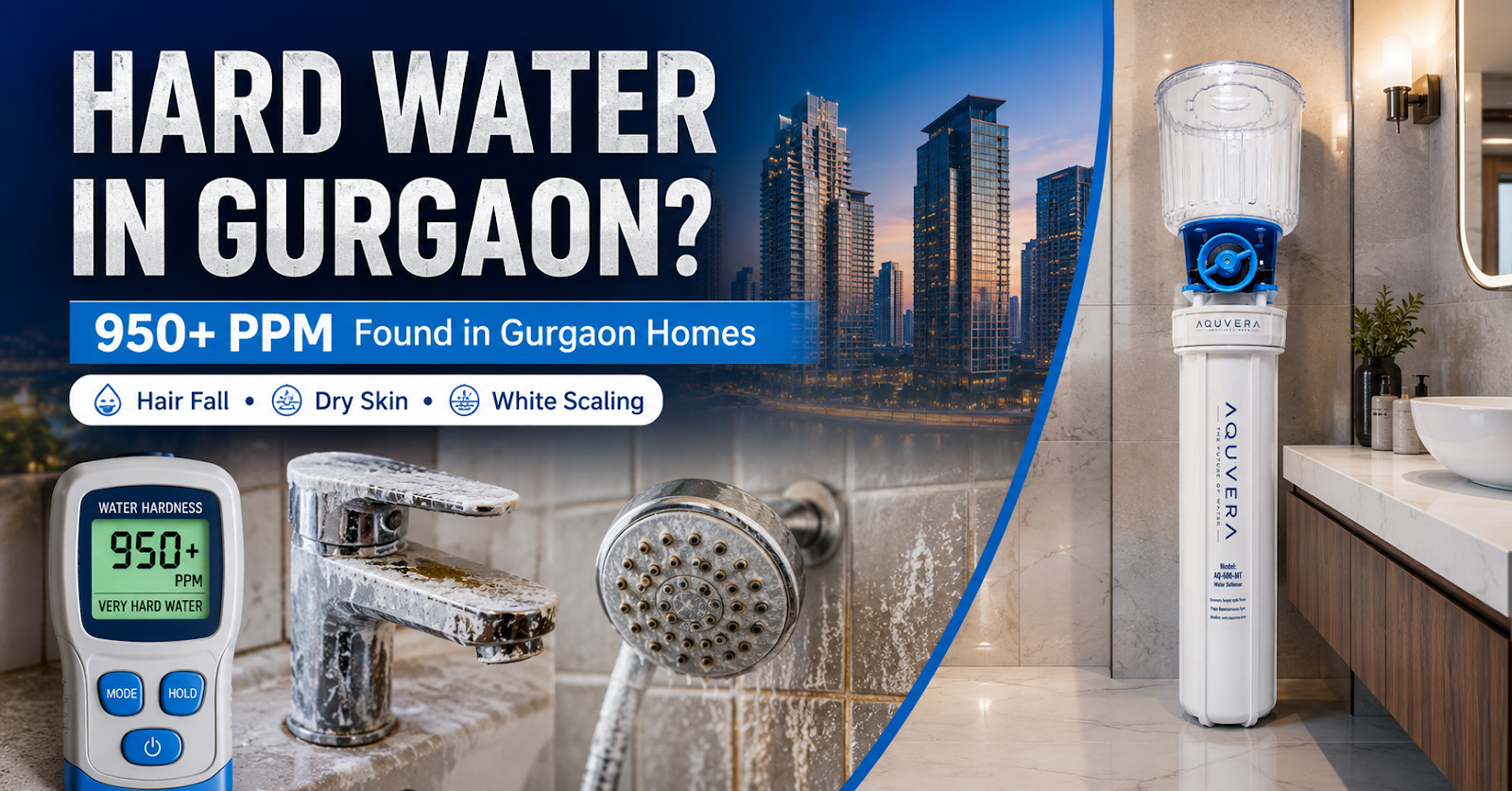
Hard Water in Gurgaon: The Hidden Problem Affecting Your Hair, Skin & Home
Every year you're changing your shower head. Each year your white bathroom tiles look even whiter. Hair is falling more than before, even after changing shampoos!
It's very likely that the real reason is not your shampoo, and not the weather...
It's the water in your taps. For millions of households living in high rises and builder floor homes in Gurgaon, the hard water problem has become an unaffordable pain in the eye.
After testing hundreds of households across the NCR, time and again I meet home owners who, completely sure it’s the climate, their food, or their shampoo… but as soon as we perform our simple tests they come to realise it is, in fact, the water from their very own tap! What this means for your family and what you can do is explained below:
What Is Hard Water?
Excess of calcium & magnesium salts dissolves into water, whichis known as ‘HARD WATER’. In many parts of Gurgaon, hard water comes at levels of300 - 900 PPM, this results in skin dry ness, hair fall, white scale formation, appliance corrosion & inadequate foaming of soap.
Water Hardness Classification Table
Hardness Level (PPM) Classification
0–60 Soft
61–120 Moderately Hard
121–180 Hard
181–500 Very Hard
500–900 Extremely Hard
900+ Severe Hardness
When we test water in Gurgaon, homeowners are often shocked to see their taps hit “Extremely Hard” or worse. The reason is simple: the groundwater running under this city is loaded with dissolved rocks and minerals.
Why Is Water So Hard in Gurgaon?
Gurugram has developed extremely fast and its municipal water system has not kept pace with this urbanisation. In some areas surface water is provided as treated drinking water, but the city relies heavily on groundwater. Vast numbers of residential societies consume thousands of liters of deep borewell water to meet everyday needs of their huge number of inhabitants.
Central Ground Water Board's (CGWB) report on "Dynamic Ground Water Resources of Haryana" names Gurugram as an over exploited zone - we are extracting water from the ground at a much higher pace than rains replenishing it.
As the water table moves deeper in the ground, the water is in contact with geological material that has plenty of calcium and magnesium. This water arrives in your flat overhead tank laden with these minerals. We frequently observe such high mineralization in the developed areas of fast-developing corridors. There is a lot of scaling in houses that are on Sohna Road, Golf Course Extension Road, and New Gurgaon.
Those sectors of the town that rely mostly on private bore wells - sectors 56, 57, 65, 67, 70, 83, 84, 71, 72, 74, 100, 101, 102 and 103 etc - have water quality problems, quite possibly the worst in Haryana.
Signs Your Gurgaon Home Has Hard Water
You don’t need a lab kit. Honestly, just look around your house (and at yourself).
- Hair looks rough, breaks easily, and falls out in clumps
- Scalp stays itchy and dry, shampoo doesn’t help much
- Skin feels dry and tight, even after you shower—soap just doesn’t lather right
- Chalky white stains cover your taps, glass shower doors, and faucets
- Your geyser keeps dying or stops working efficiently (thanks to scale)
- Towels and clothes come out stiff and dull no matter how much detergent you use
What We Find in the Field?
Gurgaon’s water quality really depends on where the water comes from in your building.
- Aquvera's Water Testing Experience in Signature Global Park Society on Sohna Road and more nearby societies, The hardness levels exceeding 950 PPM were recorded in several homes
- Direct Municipal Water: Homes hooked to the GMDA supply usually see hardness between 100 and 200 PPM (not too terrible).
- Mixed Supply: Many big societies mix city water and borewell water, so hardness swings between 300 and 600 PPM.
- Only Borewell: Here’s where things get rough. Some places hit 600, 800, even 1200 PPM. You can literally see scale building up in pipes after a couple of months.
Aquvera's Water Testing Experience in Signature Global Park, Sohna Road, Gurgaon
Take Sohna Road. Our Aquvera team tested water in many of apartments there. The readings?
950+ PPM in quite a few homes. For reference, the Indian standard says 600 PPM is the highest you should ever see. These residents were dealing with nonstop hair loss, rough skin, ruined new taps, and geyser repairs every few months.
When we installed ion-exchange water softeners, the difference was immediate—no more chalky stains, soap lathered up, hair and skin felt noticeably softer, and the shower heads actually looked clean for once. It’s nothing fancy. It’s just science (and the right tech).
See our live installation video of Whole House Water Softener in Signature Global Park, Gurgaon.
Where’s the Hard Water Worst in Gurgaon?
Honestly, most of expanding Gurgaon struggles with this. We get the most calls from:
- Sohna Road
- Golf Course Extension Road
- New Gurgaon
- Sectors 56, 57, 65, 67, 70, 83, 84
The catch is, even two towers standing side by side might have different water, depending on how deep their borewells are. That’s why on-site water testing matters before you buy anything to fix the problem.
Best Solution for Hard Water in Gurgaon?
Forget magnetic attachments and cheap filters—they don’t solve the problem. Only ion exchange water softeners actually remove those dissolved minerals.
Here’s the difference:
- Regular filters (like RO pre-filters or tap attachments) only take out sand, silt, and chlorine. They don’t touch calcium and magnesium.
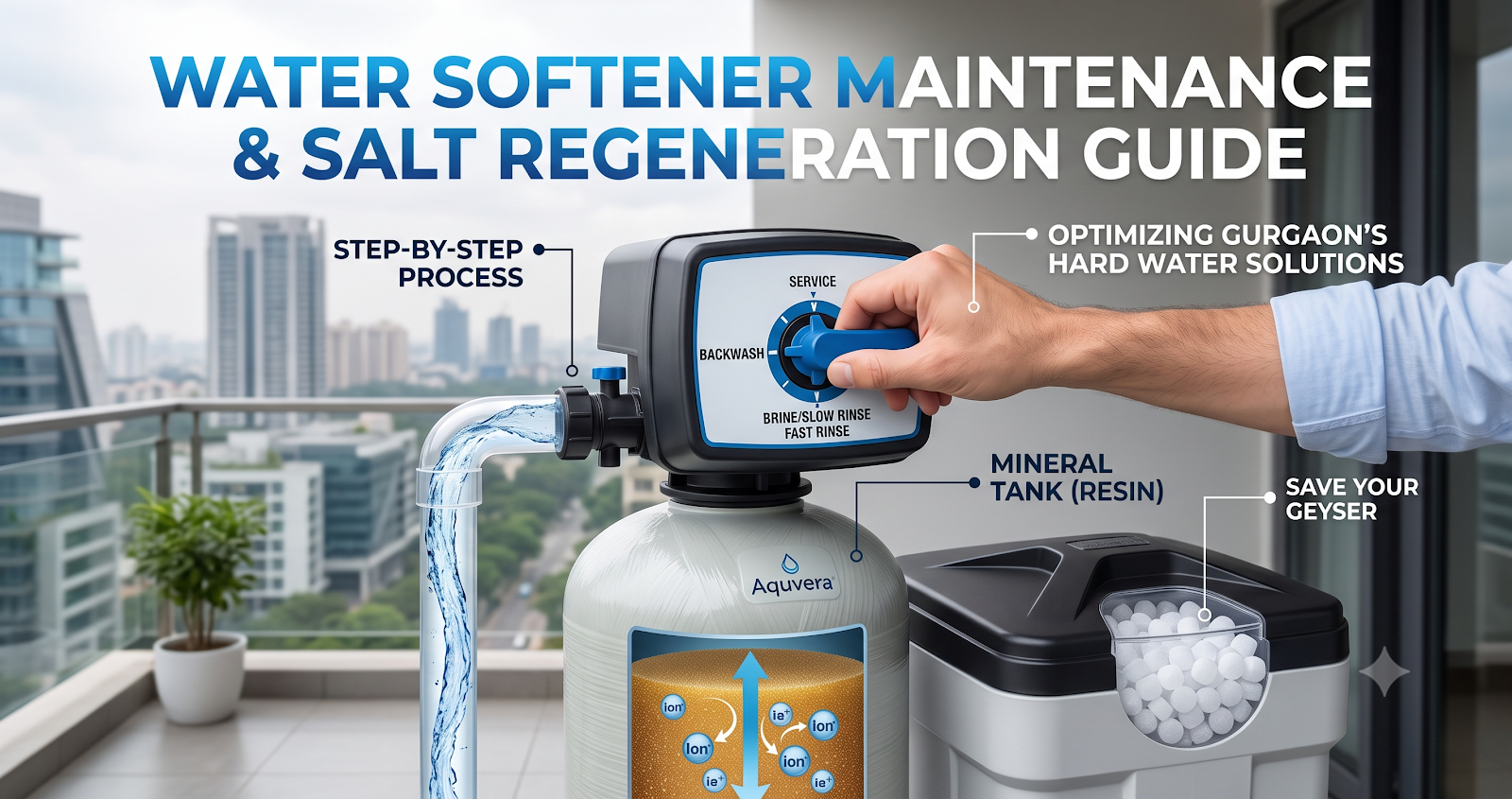
- A proper water softener uses sodium-charged resin beads. When hard water passes through, the beads pull out the calcium and magnesium and swap them for sodium, making your water soft.
What System Do You Need?
- Bathroom softeners work if you want to protect your hair, skin, or one geyser in a rented place.
- Apartment-level softeners go on your main water line and give every tap in your flat soft water.
- Whole house units cover villas or builder floors and protect every bathroom, kitchen, and appliance.
Quick FAQs
Is Gurgaon’s water hard or soft?
Mostly hard—especially in high-rises and newer sectors relying on borewells. The minerals cause all that scale and roughness.
What’s the average water hardness?
Most places are between 300 and 800 PPM, but borewell-reliant sectors often blast through 900 PPM.
Can hard water cause hair fall?
Absolutely. The minerals build up on your scalp and hair, drying it out and making it break or fall.
What’s a safe water hardness level?
200 PPM is considered okay, 600 PPM is the absolute maximum if there’s no other source.
How can I measure my water hardness?
You can pick up DIY test strips online for a quick check, or book a free professional test with a company like Aquvera.
References
- Central Ground Water Board (CGWB), Ground Water Year Book Haryana State
- Central Ground Water Board (CGWB), Dynamic Ground Water Resources of India
- Bureau of Indian Standards (BIS), IS 10500:2012 Drinking Water Specifications
- NITI Aayog, Composite Water Management Index
- Haryana Water Resources Authority (HWRA), Gurugram Groundwater Quality and Depletion Reports
Book a Free Water Hardness Test in Gurgaon
If you’re tired of hair fall, dry skin, white stains, and endless appliance repairs, get your water tested. Fixing the root problem is easier—and more important—than swapping out one shampoo for another.
Want expert help? Aquvera offers free water testing and advice across Gurgaon and Delhi NCR.
📞 +91 8076676871, 8287687567
🌐 https://theaquvera.com
📧 hello@theaquvera.com
💬 https://wa.me/918076676871
Don’t wait until your pipes or hair give up. Test your water and sort it out before it causes more trouble.
💬 Comments 0
Leave a Comment
Your email will not be published. Fields marked * are required.