Hard Water Effects on Daily Life: Why Your Home May Need a Water Softener
You clean the bathroom on Sunday. By Wednesday, those white stains are back.
Your shampoo barely lathers. Your skin feels itchy after a shower. Steel utensils look cloudy, and the geyser seems to need repairs far too often.
These problems may look unrelated, but they often have one common cause: hard water.
For many families in Delhi NCR—especially in borewell-dependent areas of Noida, Greater Noida, Ghaziabad, Indirapuram and Faridabad—hard water effects are part of daily life. Most people simply don’t realize that the water is the problem.
What Is Hard Water?
As groundwater passes through rocks and soil, it picks up minerals, mainly calcium and magnesium. When these minerals are present in higher amounts, the water becomes hard.
Hard water usually looks clear and smells normal. That is why it often goes unnoticed until scale, dryness and appliance problems begin appearing.
Groundwater meets nearly 50% of India’s urban water demand, according to the Central Ground Water Board. The BIS lists 200 mg/L as the acceptable limit for total hardness in drinking water and 600 mg/L as the permissible limit when no alternative source is available. Government water-quality data confirms these figures
💡- https://www.pib.gov.in/Pressreleaseshare.aspx?PRID=1843385.
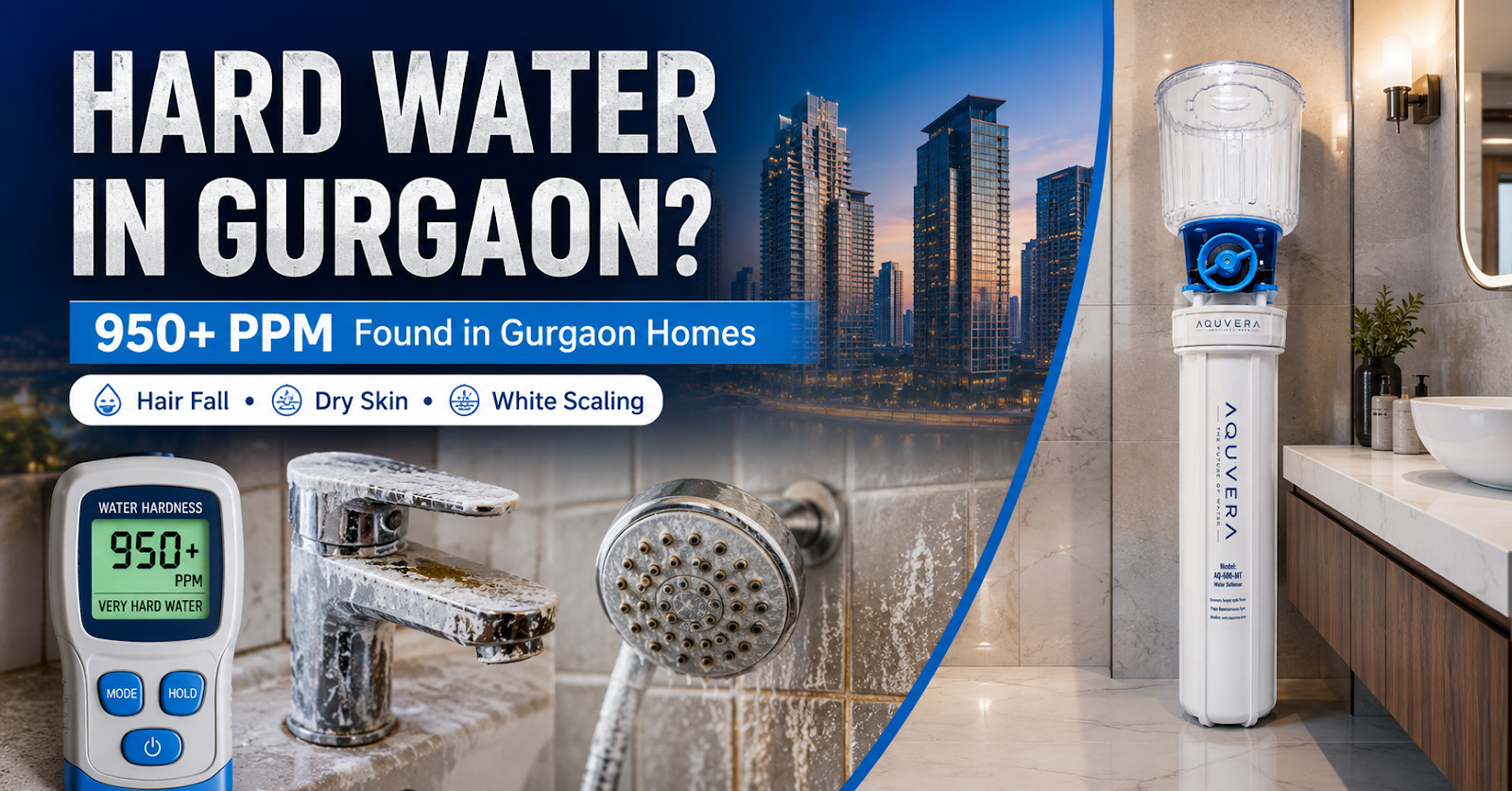
The problem is particularly relevant locally. A CGWB district profile for Ghaziabad recorded hardness above 600 mg/L in 11% of samples, with one reading reaching 990 mg/L.
💡- https://cgwb.gov.in/old_website/District_Profile/UP/Ghaziabad.pdf
However, water quality can vary between neighboring societies. A proper test is the only reliable way to know your home’s hardness level.
Common Signs of Hard Water at Home
⚪White scale on taps, tiles, buckets and shower glass
🧼Soap, shampoo or detergent not lathering properly
🖐️Dry or itchy skin after bathing
💇♀️Rough, dull or tangled hair
🍽️Cloudy spots on utensils and glassware
👕Stiff clothes after washing
⚙️Scale around the geyser, RO tap or washing-machine inlet
💧Reduced flow from taps and showerheads
💡Learn more about the five clear signs of hard water:
https://www.theaquvera.com/blog-post.php?post=5-signs-hard-water
Hard Water Effects on Skin and Hair
Hardness minerals can combine with soap and leave a thin residue behind. This makes soap and shampoo harder to rinse away completely.
As a result, skin may feel dry, tight or itchy. Hair can become rough, dull, tangled and more prone to breakage. Hard water is not the only possible reason for hair fall, but it can make existing dryness and hair damage worse.
💡Learn how hard water affects skin and hair:
https://www.theaquvera.com/blog-post.php?post=hard-water-skin-hair
The Hidden Cost of Cleaning and Repairs
Hard water scale keeps returning because regular cleaners remove the visible marks—not the minerals causing them.
You may end up using more shampoo, detergent, bathroom cleaner and dishwashing liquid. Clothes can feel stiff, utensils lose their shine, and freshly cleaned taps quickly look old again.
The same scale can form inside geysers, washing-machine inlets, showerheads and pipes. A scaled heating element may work less efficiently, while restricted pipes and fittings can lead to weaker water flow and repeated repairs.
Each expense looks small on its own. Together, they become a regular hidden cost.
Why a Water Softener for Home Is a Practical Necessity
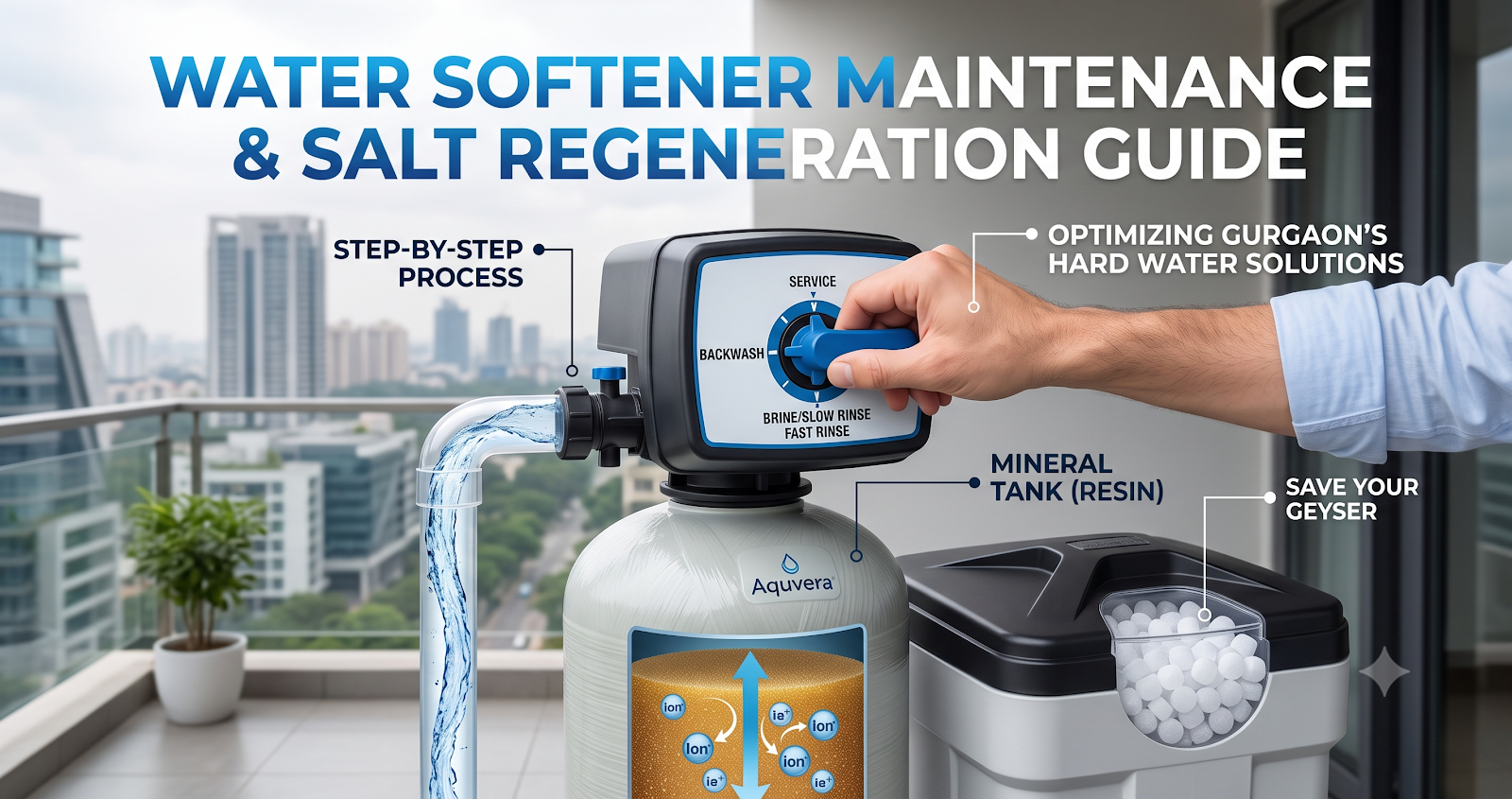
A water softener for home treats the cause instead of repeatedly cleaning the symptoms. It reduces hardness-causing calcium and magnesium through a process called ion exchange.
The right system can provide better soap lather, easier cleaning, less scale and improved protection for plumbing and water-using appliances. Understand how ion-exchange water softeners work:
💡https://www.theaquvera.com/blog-post.php?post=ion-exchange-explained
Explore Aquvera bathroom and whole-house water softeners:
💡https://www.theaquvera.com/#products
The correct capacity depends on your water hardness, family size, daily usage and flow rate. Bigger is not automatically better—which is why testing should always come first.
Frequently Asked Questions
Is hard water the same as high TDS?
No. TDS measures all dissolved substances, while hardness mainly measures calcium and magnesium. A TDS meter alone cannot confirm your water’s exact hardness.
Do I need a water softener if I already have an RO?
Usually, yes. A kitchen RO treats drinking water at one point. It does not soften water going to your bathroom, geyser, washing machine or plumbing.
Can hard water cause hair fall?
Hard water can worsen residue, dryness, tangling and breakage, but hair fall can have several medical or nutritional causes. A softener improves water quality; it is not a medical treatment.
How long does a water softener last?
A quality system can serve for many years. Resin life and performance depend on water hardness, usage, timely regeneration and proper maintenance.
Which water softener is right for my home?
A bathroom softener treats one bathroom, while a whole-house softener treats the main household supply. The right choice should be based on an on-site hardness test.
Test Your Water Before Spending Money
If white stains, dry skin and repeated appliance scaling are becoming normal in your home, don’t keep guessing.
Aquvera offers a free, no-obligation water hardness test at your home across Delhi NCR. Your water is tested first, and the suitable softener capacity is recommended according to the actual reading and household usage.
Ready to check your home’s water?
Book Your FREE Water Hardness Test:
💡https://www.theaquvera.com/#demo-form
📲Call or WhatsApp: 8076676871 | 8287687567
💬 Comments 0
Leave a Comment
Your email will not be published. Fields marked * are required.